
MEng Program
Our Master of Engineering (MEng) program was designed with your future career in mind. Expand your career opportunities by strengthening your technical knowledge. Or, pivot into a different area!
Our MEng program provides students with advanced professional training and skills that employers want. Graduating from our MEng program will differentiate you in a crowded marketplace.
Our students come from a variety of different backgrounds. Some have completed an undergraduate degree in engineering, while others have a physical science background (e.g., mathematics, statistics, physics, chemistry, etc. undergraduate degrees).
Our MEng is a professional degree consisting of 10 half-credit (H) courses or 7 half-credit (H) courses plus an MEng project.
The program may be completed on a full-time, extended full-time, or part-time basis.
MEng Degree Options
- Full-time: 1 year (3 sessions)
- Extended full-time: 2 years (6 sessions)*
- Part-time: 3 years (9 sessions)
MEng Requirements
- 10 half-credit (H) courses; or
- 7 half-credit (H) courses + an MEng project
* Approximately 60-70% of our students opt for the extended full-time program. These students have a more flexible schedule that allows them to take advantage of the many opportunities available in our MiC series and at the University.
MiC Series
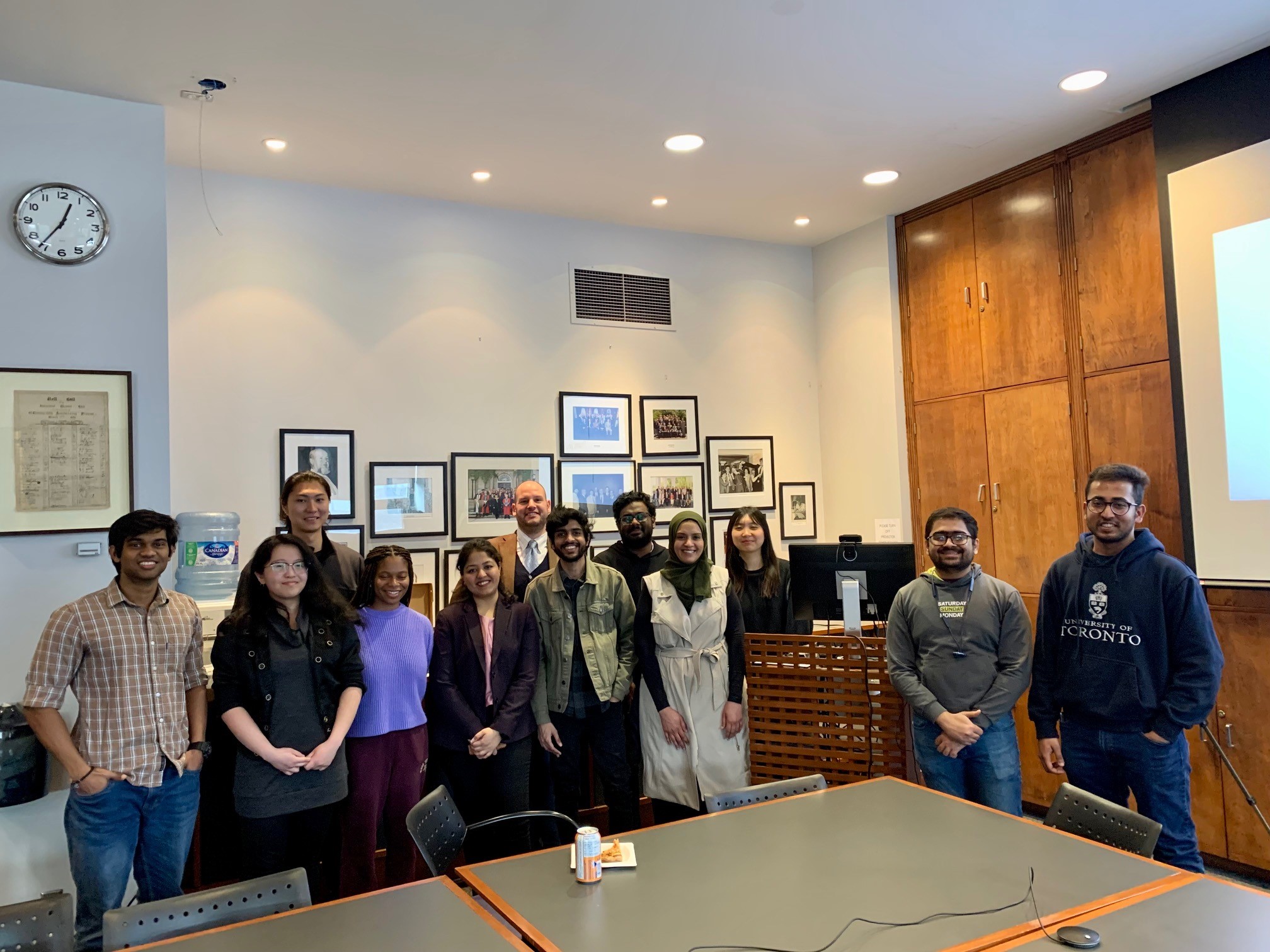
The MiC (MEng in ChemE) series is a professional initiative centered on student experience and engagement. MiC provides our students with experiential, social, and professional opportunities to connect with industry and with each other.
The MiC series complements rigorous academic coursework, offering students a balance between theory and application.
Learn more about the MiC professional and experiential opportunities.
The MiC series is only available to ChemE MEng students
Emphases
Emphases are sets of courses from a specific area or industry. Students who are interested in completing an emphasis (or 2 emphases) are encouraged to look at the requirements for the emphasis. Once completed, an emphasis is usually listed on the student's transcript.
Taking an emphasis is optional and students may graduate with a maximum of two emphases. Students may count a maximum of one course towards the requirements of any two emphases.
Our Career Path section will provide you with a better understanding of where each emphasis can take you. Below are the emphases that are available to ChemE MEng students.
The Emphasis in Advanced Manufacturing is sponsored by the Toronto Institute for Advanced Manufacturing, and was developed to expose Master of Engineering students to topics in advanced manufacturing. MEng students can choose to take courses from either of two streams: Manufacturing Management and Manufacturing Engineering.
The Emphasis in Advanced Manufacturing is available to MEng students in any of four departments in the Faculty (Aerospace, Chemical, Mechanical & Industrial, and Materials Science).
Soft materials include polymers, liquids, colloidal suspensions, gels, many biological materials, and more. They are used in various industry sectors including oil and gas, chemical, pharmaceutics, food (e.g. mayonnaise) and consumer products (e.g. toothpaste, laundry detergent).
From nanomaterials to scale-up processing and manufacturing, the courses in this emphasis cover both the fundamentals of creating such soft materials and optimizing them in a wide range of applications
Completing the Emphasis in Advanced Water Technologies will lead to a statement of completion on the student transcript, demonstrating in-depth knowledge of water treatment methods.
Analytics covers a range of methodologies, from descriptive to predictive to prescriptive approaches.
- Descriptive analytics: “What has happened?”
- Predictive analytics: “What could happen?”
- Prescriptive analytics: “What should we do?”
Recent advances in DNA sequencing, DNA synthesis and analytical technologies has enabled an in depth characterization and engineering of biological systems paving the way for their use in manufacturing a range of products from renewable fuels and chemicals, bio-products to advanced diagnostics and therapeutics for medical applications.
This emphasis in Biomanufacturing aims to prepare students to understand and engineer innovative technologies from developing organs on a chip to engineering protein for various applications in medicine, fuels, chemicals, environmental biotechnology and nutrition.
Every day, people in the developing world struggle to obtain many of the things that most of us in Canada take for granted, like clean water, safe shelter, and basic health care. Engineering students can make a difference. But to tackle these complex challenges effectively often requires a different mindset and a different set of skills. Through the Emphasis in Engineering and Globalization, and other initiatives, the Centre for Global Engineering aims to develop these capabilities in our students.
Egineering practice today demands a breadth of skills: not only technical, but also an understanding of leadership, finance and business, management, entrepreneurship and innovation. Engineers often appreciate the importance of such skills only after they join the workforce.
The Emphasis in ELITE offers University of Toronto MEng students a broad range of courses in these topics. The first of its kind in Canada, the ELITE Emphasis is targeted at engineers seeking to develop a more well-rounded skill set.
Environmental consulting engineers are in high demand. Environmental-related projects to monitor contaminants, and mitigate their effects on the ecosystems, mean that engineers with this training are highly sought after. Hence, this specialized field requires formal training, as this career path cannot quickly pivot.
Learn more about the emphasis in Environmental Engineering Consulting
NOTE: This Emphasis is ONLY available for ChemE MEng students
Issues of energy production and consumption, and the associated environmental impacts, top many lists of global challenges for the 21st century. Engineering leadership is key to the development and implementation of sustainable energy technologies to address these challenges.
The Emphasis in Sustainable Energy is sponsored by the Climate Positive Energy, and was developed to expose engineering graduate students to a variety of energy issues and technologies. MEng, MASc and PhD students who complete the Emphasis as part of their programs will develop a better understanding of the limitations, challenges, and opportunities that face contemporary energy systems, touching on both established and emerging technologies and their points of intersection.
The MEng focuses on Integrated Security Technologies and Policies aims to provide interdisciplinary training in the new era of security technologies which requires “IS Professionals", that is, engineers with a comprehensive know-how and a holistic understanding of security technologies, policies and sciences.
Learn more about the Identity, Privacy and Security emphasis
Combined Degree Program
Qualified students in their third year of the BSc program in Environmental Science at U of T Scarborough may apply for the combined Bachelor of Science/Master of Engineering program. This program is available on a full-time basis only.
MEng Project
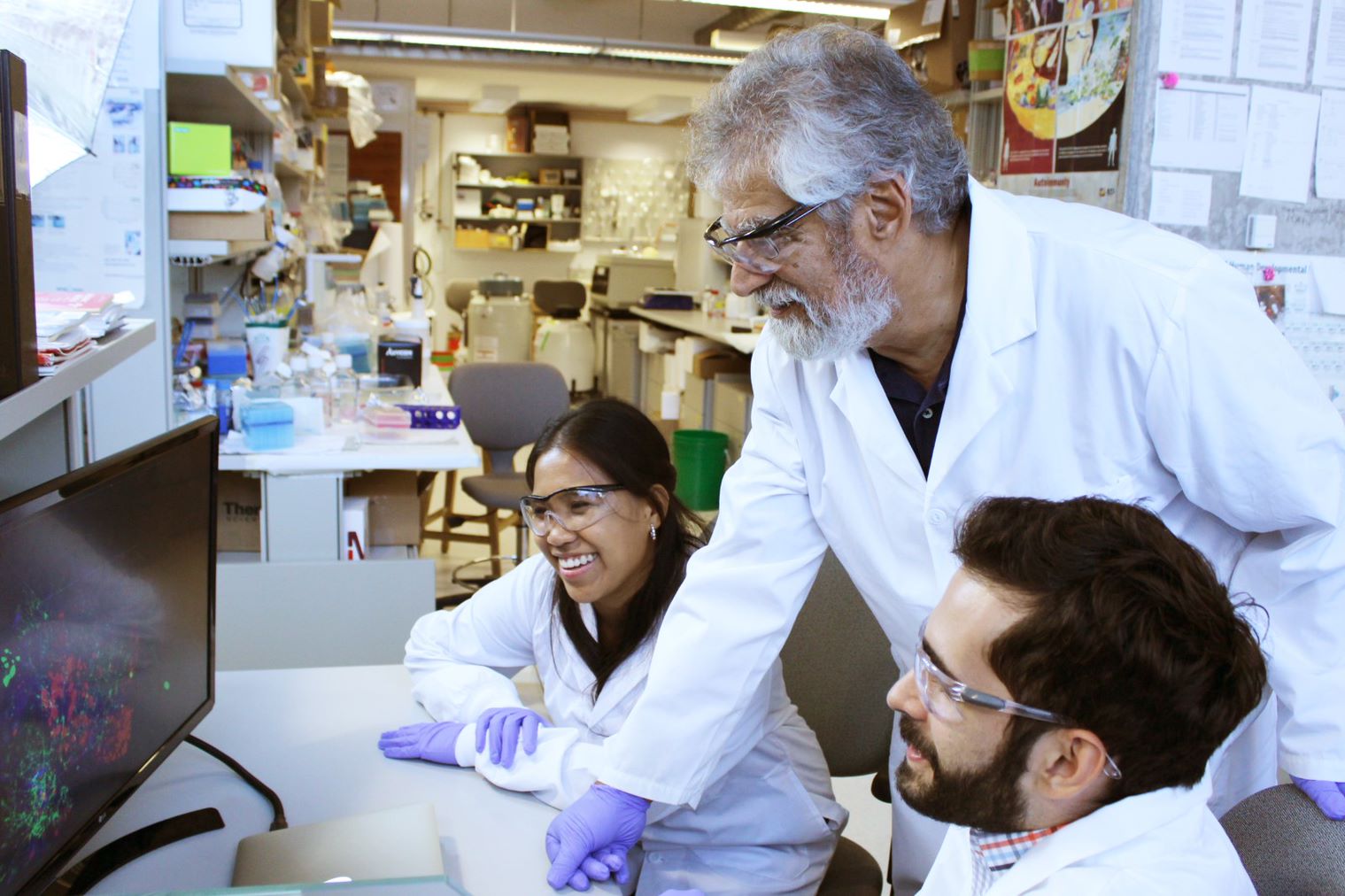
Experiential learning opportunities are important pillars to our MEng program. Pursuing a MEng project is an exciting way to develop real-world skills by directly contributing to an academic project.
Supervised by one of our faculty members, students will be exposed to academic research, the Canadian work environment, and will work alongside fellow graduate students.
If you are interested in getting your hands 'dirty' to further your educational experience, an MEng project may be right for you! Learn more about completing an MEng Project.
Collaborative Specializations (optional)
Students in the MEng program may choose to concurrently complete a collaborative specialization:
Students in a collaborative specialization must satisfy the requirements of that program in addition to their MEng requirements. Some courses may count simultaneously towards both a student’s MEng degree and a collaborative specialization. Careful course planning and consultation with the MEng Advisor and the Collaborative Specialization Advisor is recommended.