
 Edgar J. Acosta, Professor, PhD. (Oklahoma), P.Eng.
Colloids and Formulation Engineering. Formulation, characterization, and phase behavior of surfactant-based fluids: micelles, microemulsions, emulsions, foams, dispersions, lung surfactants and liquid crystals. Surfactant-based processes: oil and bitumen extraction, remediation of oil spills, polymers and nanoparticle synthesis, aqueous solvent extraction.
Room: WB131 | Tel.: 416-946-0742 | Email: edgar.acosta@utoronto.ca
 D. Grant Allen, Professor, B.A.Sc., M.A.Sc. (Toronto), Ph.D. (Waterloo), F.C.I.C., F.A.A.A.S., P.Eng.
Frank Dottori Chair in Pulp and Paper Engineering
Bioprocess engineering and its environmental applications. Biological Waste Treatment: performance and design of biological treatment systems for toxicity reduction in pulp mill effluents, biological treatment of chlorinated organic compounds, biofiltration of air pollutants. Bioconversion of waste water and waste solids into value added fuels, chemicals, materials and biosolids dewatering. Microalgae production from carbon dioxide, sunlight and wastewater for production of biofuels and biochemicals. Biofilm formation and adhesion. Microbiology and floc formation in waste treatment systems and the development of techniques of monitoring microbial communities.
Room: WB363 | Tel.: 416-978-8517 | Email: dgrant.allen@utoronto.ca
New Projects Available
- Photocatalytic pretreatment for anaerobic treatment of pulp mill wastewaters
- Cultivation of micro algae in bioreactors for the production of sustainable fuels and chemicals.
Currently accepting graduate students? Yes
- MASc
 Gisele Azimi Professor (ChemE/MSE), B.A.Sc. and M.A.Sc. (Sharif University of Technology), Ph.D. (Toronto), P.Eng, Post-doc (MIT)
co-Director, Ontario Centre for the Characterisation of Advanced Materials (OCCAM)
Canada Research Chair in Urban Mining Innovation
My research lies at the intersection of “Process Engineering”, “Electrochemistry” and “Materials Science” and combines fundamental science and engineering principals to arrive at solutions for real world applications, including: Developing innovative supercritical, electrochemical, and hydrometallurgical processes for the extraction and processing of strategic materials including rare earth elements, platinum group metals, lithium, cobalt, and iron; Developing novel generations of post lithium of rechargeable batteries that can significantly address the sustainability challenges in terms of energy, environment, and materials; The design and fabrication of advanced materials with controlled properties including high temperature ceramics, hydrophobic and scalephobic surfaces, and functionalized membranes for solid-liquid extraction.
Room: WB113 | Tel.: 416-946-7568 | Email: g.azimi@utoronto.ca
New Projects Available
- Recycling of lithium ion batteries. We will look at different aspects of the recycling process of various cathode materials like NMC and LFP.
- Supercritical fluid extraction for the recovery of valuable metals from primary and secondary resources.
- Development of lithium ion and aluminum ion batteries. We will focus on development of cathode materials and electrolytes.
- Extraction of rare earth elements from uncommon ore materials. We will develop the extraction process and elucidate the process mechanism.
Currently accepting graduate students? Yes
- PhD
 Timothy P. Bender Professor, B.Sc., Ph.D. (Carleton)
Organic Photovoltaic Devices including design, synthesis and crystal engineering of light harvesting organic materials, hole- and electron-transporting organic materials and polymers, chemical process engineering, design of experiments, parallel chemistry, molecular modeling.
Room: WB212 | Tel.: 416-978-6140 | Email: tim.bender@utoronto.ca
New Projects Available
- Accelerated materials development.
- Materials development via applied chemistry and/or chemistry to be developed.
- Physical characterization of materials for applications.
- Materials development for applications – and are engineered in the laboratory.
- Engineering organic solar cells (OSCs)/organic photovoltaics (OPVs).
- Engineering organic light emitting diodes (OLEDs).
- Life cycle analysis of OSCs/OPVs and OLEDs in true environment.
- Sustainability chemical processes.
- Sustainable materials for applications.
Accepting graduate students? Yes
- PhD & MASc
 Ariel Chan, Associate Professor, Teaching Stream, Ph.D. (Queen’s), P.Eng.
Courses: CHE304 – Chemical Engineering and Applied Chemistry Lab III, CHE305 – Chemical Engineering and Applied Chemistry Lab IV, CHE274-Engineering Economic and Analysis, CHE374 – Economic Analysis and Decision Making, APS490- Multidisciplinary Capstone.
Research Interests: Experiential learning and curriculum design, VR/AR immersive technology development for education and process safety training, and data science for EDI and engineering education.
Room: WB24 | Tel. 416-978-4320 | E-mail: ariel.chan@utoronto.ca
New Projects Available
- Life Cycle Assessment in Sustainable Fuel Productions
- Modularized Common Chemical Process and Equipment Design
- Association of Language Complexity and Competency on Academic Performance-A Data Analytic/AI Approach
- Leaky Pipeline Effect on PhD Students and Early Career Faculty from Underrepresented Communities in Engineering
Accepting graduate students? Yes
- MEng
 Arthur Chan Professor, B.S. (Pennsylvania), M.S., Ph.D. (CIT)
Canada Research Chair in Atmospheric Chemistry and Health
Analytical techniques for resolving complex organic mixtures, atmospheric chemistry, particulate matter and human health, organic aerosols.
Room: WB201B | Tel.: (416)-978-2602 | Email: arthurwh.chan@utoronto.ca
New Projects Available
-
Chemistry
- Wildfire emissions
- Nanoplastics
Accepting graduate students? Yes
- PhD
 Ya-Huei (Cathy) Chin Professor, B.Sc. (Oklahoma), M.Sc. (Oklahoma), Ph.D. (UC Berkeley)
Associate Chair, Research
Canada Research Chair in Advanced Catalysis for Sustainable Chemistry
Applications of multidisciplinary research strategy (kinetic and isotopic techniques, spectroscopy, and theoretical modeling) to advance fundamental, molecular scale understanding of heterogeneous catalytic processes. Understand heterogeneous catalytic science, deciphering the structures and dynamics of catalyst surfaces and connecting these surface events at the atomic scale to their macroscopic catalytic behavior for fuel processing, chemical synthesis, and emission control technologies.
Room: WB12 | Tel: 416-978-8868 | Email: cathy.chin@utoronto.ca
New Projects Available
- industrial catalytic technology developing: understanding the effects of microenvironment in sustainable chemical and fuel synthesis
- bridging thermo- and electro-catalysis in the synthesis of sustainable liquid fuel
- connect the structure and reactivity of transition metal catalysts in C-H, C-O, C-C bond activation
Accepting graduate students? Yes
- PhD
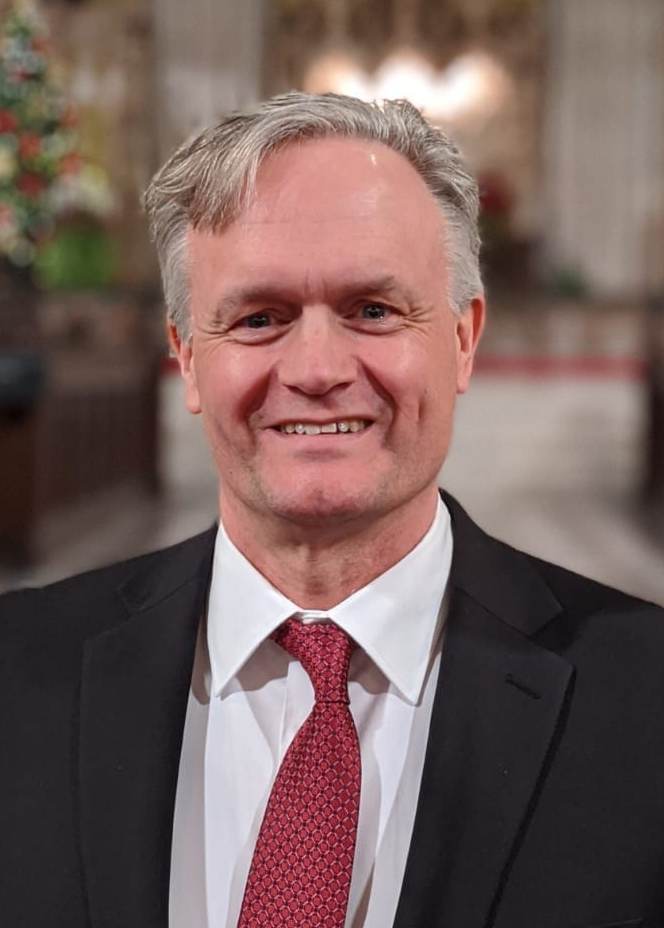 William R. Cluett Professor and Dean’s Advisor on Innovations in Undergraduate Education; B.Sc. (Queen’s), Ph.D. (Alberta), P.Eng
System identification, control and design. Systems biology.
Room: WB341 | Email: will.cluett@utoronto.ca
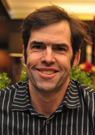 Nikolai DeMartini, Associate Professor, PhD
Director, Pulp & Paper Centre
NSERC Industrial Research Chair in the Role of Inorganics in the Industrial Processing of Woody Biomass
The role and fate of inorganics in the industrial processing of woody biomass with an emphasis on energy efficiency and emissions. Current topics include scaling in spent liquor evaporators and trace metals in alkaline solutions in the pulp and paper industry; and, the forms and release of inorganics during thermal conversion processes.
Room: WB225 | Tel.: 416-978-4318 | Email: nikolai.demartini@utoronto.ca
New Projects Available
- TBA
Currently accepting graduate students? Yes
- PhD
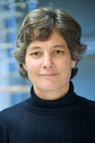 Elizabeth A. Edwards University Professor, B.Eng., M.Eng (McGill), Ph.D. (Stanford), P.Eng.
Biodegradation and bioremediation of groundwater pollutants such as aromatic hydrocarbons and chlorinated solvents. Industrial wastewater treatment with a focus on anaerobic digestion. Kinetics and biochemical pathways of microbial degradative reactions. Identification of microbial species capable of anaerobic biodegradation. Molecular biology and metagenomics in environmental microbiology.
Room: WB420D | Tel.: 416-946-3506 | Email: elizabeth.edwards@utoronto.ca
New Projects Available
- Anaerobic microbial biotransformation of pollutants
Accepting graduate students? Potentially
- MASc, MEng & PhD
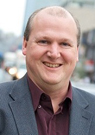 Greg J. Evans Professor, B.A.Sc., M.A.Sc., Ph.D., P.Eng., FCAE, FAAAS
Director, Southern Ontario Centre for Atmospheric and Aerosol Research (SOCAAR); Director, Institute for Studies in Transdisciplinary Engineering Education and Practice (ISTEP)
Urban Air Pollution: traffic related air pollutants, population exposure, air pollutant toxicity, climate change.
Measurement Methods: advanced instrumentation, chemical analysis, inexpensive sensors, aerosol and environmental chemistry.
Data Mining: source identification, geospatial modeling, smart cities.
Engineering Education: transdisciplinary competencies, lab-based learning, metacognition and lifelong skills development.
Room: WB127 | Tel.: 416-978-1821 | Email: greg.evans@utoronto.ca
New Projects Available
- Ultrafine particles near airports
- Non exhaust emissions from vehicle brakes and tires
- Impact of wildfires on air quality
- Engineering education research: use of AI in education, career paths of engineering graduates
Accepting graduate students? Potentially
- PhD & MASc
 Jennifer Farmer, Associate Professor, Teaching Stream, Ph.D. (York)
Associate Chair, Undergraduate Student Experience
Courses: Applied Chemistry- Laboratory I (CHE204F), Applied Chemistry- Laboratory II (CHE205S), Applied Chemistry IV – Applied Polymer Chemistry, Science and Engineering (CHE562).
Research Interests: Engineering Education, in particular lab-based learning and active learning pedagogy.
Room: WB216B | Tel.: 416-978-6561 | E-mail: jennifer.farmer@utoronto.ca
New Projects Available
- Chemical Engineering Education based projects
Accepting graduate students? Maybe
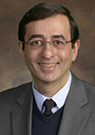 Ramin R. Farnood Professor, B.A.Sc., M.A.Sc. (Sharif), Ph.D. (Toronto)
Chair, Dept. of Chemical Engineering & Applied Chemistry
Michael E. Charles Chair in Chemical Engineering
Room: WB221 | Tel.: 416-978-1516 | Email: ramin.farnood@utoronto.ca
New Projects Available
- Photocatalytic conversion of biomass to value added chemicals
Currently accepting graduate students? Yes
- PhD & MASc
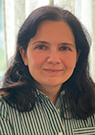 Daniela Galatro, Assistant Professor, Teaching Stream, MSc (UNEXPO), PhD (Toronto)
Courses: Heat and Mass Transfer (CHE210), Data-based Modelling for Prediction and Control (CHE507),
Petroleum Processing (CHE451), Team Strategies for Engineering Design (CHE334)
Research Interests: Engineering Education; Data Analytics, and Machine Learning Applied to Process Engineering
Room: WB28 | Tel.: 416-978-1143 | Email: daniela.galatro@utoronto.ca
 Rachel Gregor, Assistant Professor
B.Sc. and Ph.D (Ben-Gurion University), Postdoc (MIT)
Principal Investigator, Microbial Chemical Ecology Lab and BioZone- Centre for Applied Bioscience and Bioengineering
Understanding and engineering environmental microbial communities through their chemistry.
Keywords: untargeted metabolomics, environmental and marine microbiology, drug discovery, natural products, mass spectrometry, high-throughput analysis, multi-omics, marine carbon cycle, microbiome engineering, microbial ecology.
Room: WB420B | Tel.: 416-978-6133 | Email: rachel.gregor@utoronto.ca
New Projects Available
- Multi-omics analysis and natural product discovery
- Microbial communities and the marine carbon cycle
- Environmental reservoirs of aquatic pathogens
Accepting graduate students? Yes
- PhD & MASc
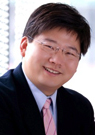 Frank Gu Professor, Ph.D. (Queen’s), Postdoc (MIT-Harvard)
Director, Institute for Water Innovation (IWI)
Principal Investigator, The Mixture Lab
NSERC Senior Industrial Research Chair in Nanotechnology Engineering
Frank Gu leads The Mixture Lab at the University of Toronto, a research group pioneering how AI, automation, and surface science transform the way new materials and formulations are discovered. His team develops platform technologies for accelerated innovation, with applications across healthcare, energy, agriculture, and consumer products.
Room: MY871 | Tel.: 416-978-8518 | Email: f.gu@utoronto.ca
New Projects Available
- Autonomous laboratory for formulation discovery
- Self-driving labs for advanced characterization
Currently accepting graduate students? Yes
- PhD & MASc
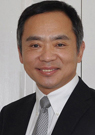 Charles Q. Jia Professor, B.Eng., M.Eng. (Chongqing), Ph.D. (McMaster), P.Eng.
Associate Chair, Continuing Professional Development
Nanoporous carbons for air and water purification and capacitive electrical energy storage; nanoporous carbon synthesis from biomass and industrial wastes; industrial waste valorization; environmental and industrial applications of inorganic sulphur chemistry; simulation of environmental fate, transport and impact of pollutants.
Room: WB326 | Tel.: 416-946-3097 | Fax: 416-978-8605 | Email: cq.jia@utoronto.ca
New Projects Available
-
Biochar as a functional nanoporous material for sustainability.
Accepting graduate students? Yes
- MASc & PhD
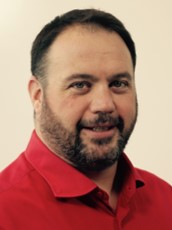
Peter Keech, Associate Professor
BASc (Guelph), MSc (Guelph), PhD (Calgary)
Room: WB226 | Email: peter.keech@utoronto.ca
New Projects Available
- TBA
Accepting graduate students? TBD
- TBD
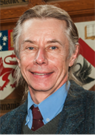 Donald W. Kirk Professor, B.A.Sc., M.A.Sc., Ph.D., P.Eng.
Electrochemical engineering, design, modelling, electrocatalyst development, reaction kinetic studies, activated carbon for electrodes in supercapacitors and batteries, and carbon sequestration .
Room: WB246 | Tel.: 416-978-7406 | Email: don.kirk@utoronto.ca
New Projects Available
- Hydrocarbonization of plastics
- Electrochemical CO2 conversion
Accepting graduate students? Yes
- MASc
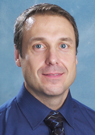 Yuri A. Lawryshyn Professor, B.A.Sc. (Toronto), M.A.Sc. (Toronto), Ph.D. (Toronto), MBA (Ivey/UWO), FinEng-Dipl. (Schulich/York), P.Eng.
Director, Centre for Management of Technology and Entrepreneurship
Joseph C. Paradi Chair in Information Engineering
Applying Information Technology with analytical and numerical methods to solve complex, but practical, problems. Research areas: real options analysis, business process optimization, financial engineering, asset management in the municipal environmental sector and environmental research.
Room: WB256 | Tel: 416-946-0576 | Email: yuri.lawryshyn@utoronto.ca
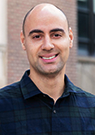 Christopher E. Lawson, Assistant Professor, B.A.Sc., M.A.Sc. (UBC), Ph.D. (Wisconsin), Post-doc (Berkeley Lab)
Principal Investigator, Microbiome Engineering Lab and BioZone — Centre for Applied Bioscience and Bioengineering
Microbiome engineering, systems biology, synthetic biology, microbial ecology, machine learning, biological waste treatment, resource recovery, environmental biotechnology.
Room: 412 | Email: chris.lawson@utoronto.ca

Radhakrishnan Mahadevan Professor, B.Tech. (Indian Institute of Technology), Ph.D. (Delaware)
Associate Chair, Undergraduate Curriculum Development
Canada Research Chair in Metabolic Systems Engineering
Systems biology, synthetic biology, metabolic engineering, metabolic modeling and model-based design, bioprocess optimization & control, artificial intelligence, machine learning, dynamic control of metabolism, industrial biotechnology for biochemicals and biofuels, environmental biotechnology, Carbon fixation, biomedical systems, human metabolism, gut microbiome, pharmacokinetic and pharmacodynamic modeling, personalized nutrition and medicine.
Room: WB213 | Tel.: 416-946-0996 | Email: krishna.mahadevan@utoronto.ca
New Projects Available
- Machine learning for bio catalyst engineering
- Bioengineering Mine Tailings for Nickel Extraction
- Hybrid Deterministic and Machine Learning for Metabolic Engineering
Currently accepting graduate students? Yes
- PhD & MASc
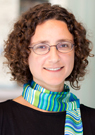
Emma R. Master Professor, Robert Korthals Chair in Sustainability, B.Sc. (McGill), Ph.D. (UBC), Post-doc., KTH, Stockholm Sweden
Director, BioZone – Centre for Applied Bioscience and Bioengineering
Discovery, design and production of enzymes that synthesize new bio-derived materials and value-added chemicals from renewable plant sources.
Room: WB420C | Tel.: 416-946-7861 | Email: emma.master@utoronto.ca
New Projects Available
- Enzyme engineering, Biocatalytic synthesis of bio-based materials
Currently accepting graduate students? Yes
- PhD & MASc
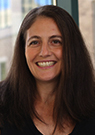
Alison P. McGuigan Professor, MEng. (Oxford), PhD (Toronto), Post-Doc (Harvard, Stanford)
Canada Research Chair in Tissue Engineering and Disease Modelling
Tissue engineering, microfabrication, disease modeling, systems biology, 2D and 3D cell organization and self-assembly, cell migration, tissue patterning and boundaries, modelling tissue organization mechanisms, in vitro drug screening tools.
Room: WB338 | Tel.: 416-978-7552 | Email: alison.mcguigan@utoronto.ca
New Projects Available
- Engineering dynamic disease models for monitoring disease progression mechanisms
Accepting graduate students? Maybe
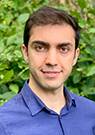 Seyed Mohamad Moosavi, Assistant Professor, B.Sc. (Sharif Univ.), M.Sc. and Ph.D. (EPFL)
Principal Investigator, AI4ChemS group and Faculty Affiliate at the Vector Institute for Artificial Intelligence
Vision: Autonomous multi-scale materials design and discovery
Methods: machine learning, artificial intelligence, molecular simulation
Area: energy materials, porous materials
Applications: gas separation, catalysis, energy storage, carbon capture
Room: WB365 | Tel.: 416-978-7532 | Email: mohamad.moosavi@utoronto.ca
New Projects Available
-
AI for Materials Discovery
-
Geometric Deep Learning for Porous Materials
-
Large Language Models for Scientific Discovery
Accepting graduate students? Yes
- PhD & MASc
 Bertrand Neyhouse Assistant Professor
B.Sc. (Ohio University), Ph.D. (MIT), Postdoc (Michigan)
Principal Investigator, Neyhouse Research Group
My research group focuses on the design and scale-up of electrochemical systems, applying foundational chemical engineering principles to intensify electrochemical manufacturing. We are particularly interested in sustainable energy conversion technologies and grid-scale energy storage. Our work leverages reactor engineering, mathematical modeling, electrochemical synthesis, electrocatalysis, materials engineering, and techno-economic analysis.
Room: WB224 | Tel.: 416-946-0082 | Email: bertrand.neyhouse@utoronto.ca
New Projects Available
- Redox flow battery scale-up and reactor engineering
- Characterization and reactor design for off-electrode catalytic processes
- Redox-active polymers for mediated electrochemical manufacturing
- Electrochemical processes for plastic recycling
Currently accepting graduate students? Yes
- MASc & PhD
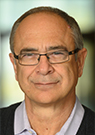
Vladimiros G. Papangelakis Professor, Dipl. Eng. (Athens), M.Eng., Ph.D. (McGill), P.Eng., FCIM, FCAE
Senior Industrial Research Chair in Water and Sustainable Extractive Metallurgy
Aqueous process engineering; hydrometallurgy; bio-hydrometallurgy; process modelling; electrolyte solution chemistry; recycling of inorganic wastes; environmental remediation from mining and metallurgical activities; process water recovery, recycling and purification; extractive metallurgy of nickel, gold and rare earth metals.
Room: WB329 | Tel.: 416-978-1093 | Email: vladimiros.papangelakis@utoronto.ca
New Projects Available
- Water capture and purification from mining and process operations
- Bioleaching of tailings
- Rare Earth Element extraction from ores
Currently accepting graduate students? Potentially
- MASc
 Gabriel D. Patrón, Assistant Professor
B.A.Sc. (Toronto), M.Sc. (Imperial), Ph.D. (Waterloo), Postdoc (Imperial)
Principal Investigator, Advanced Process Intelligence Laboratory (APIL)
Room: WB27 | Email: gabriel.patron@utoronto.ca
Biography
My research group works at the intersection of process systems engineering and interpretable machine learning. We aim to mathematically model novel process systems, develop algorithms for autonomous process operation, and computationally design new processes and chemicals. We use tools like neural networks (e.g., quantile and physics-informed), decision trees, Bayesian and classical optimization, and process control to solve problems in sustainability, energy systems, electrification, and nanomedicine applications.
Current and Upcoming Research Projects
- Symbolic regression for real-time optimization of continuous processes.
- Physics-informed neural network-based control of semi-batch processes.
- Neural network surrogates for stochastic optimization of electrified processes.
- Learnable and interpretable decision-making for chemical plant planning.
Accepting Graduate Students
- Yes, M.A.Sc. and Ph.D.
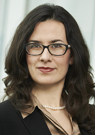
Milica Radisic Professor (IBBME, ChemE), B.Eng. McMaster University (1999), Ph.D. MIT (2004), Post-doc Harvard-MIT Division of Health Science and Technology (2005)
Canada Research Chair (Tier 1) in Organ-on-a-Chip Engineering
Organ-on-a-chip engineering, organoids, vascularization, iPSC, heart-on-a-chip, Biowire, tissue engineering, bioreactors, biophysical modulation of engineered tissues, patterned cell co-culture (2D and 3D), elastomeric polymers, 3D printing & biofabrication, automation & self-driving labs.
Room: MB317 | Tel.: 416-946-5295 | Email: m.radisic@utoronto.ca
New Projects Available
- TBA
Accepting graduate students? Yes
- PhD

Arun Ramchandran Professor, B. Chem. Eng. (Institute of Chemical Technology, Mumbai), Ph.D. (University of Notre Dame)
Associate Chair, Graduate Studies
Canada Research Chair in Engineered Soft Materials and Interfaces
The focus of our group is the comprehension and prediction of macroscale properties of a suspension (mixture of particles and liquids) by studying microscale/nanoscale interactions and properties, using a combination of experiment and theory. Our current projects are in such diverse areas as oil extraction, fabric softener design, mass transfer in flowing blood, motion of biological particles in vascular networks, and polymer blending.
Room: WB368 | Tel.: 416-978-4162 | Email: arun.ramchandran@utoronto.ca
New Projects Available
- Our research focuses on double emulsions (DEs) and Janus droplets (JDs), which have promising applications in drug delivery and controlled release due to their unique multi-phase structures. Despite their potential, industrial use is limited by instability issues like droplet coalescence, break-up, and osmotic imbalances that disrupt uniformity. To address this, we will study the formation of DEs and JDs by analyzing how droplets merge within a third fluid using precision measurements of the thinning film between them. Additionally, we have developed a computer-controlled device to investigate coalescence through controlled collisions of DEs and JDs in various configurations.
Accepting graduate students? Yes
- PhD
 Benjamin Sanchez-Lengeling Assistant Professor, B.Sc (Guanajuato), M.Sc. (Erasmus Mundus, Valencia), Ph.D. (Harvard)
The Chemical Cognition research group is focused on designing computer-robotic systems that augment our human capacity for engineering and optimizing molecular systems, reactions, and processes. Focus areas: AI for science, Domain-Expert AI interactions, Interpretability, all in the context of chemicals.
Room: WB339 | Tel.: 416-978-8754 | Email: ben.sanchez@utoronto.ca
New Projects Available
-
AI for Olfaction Self-driving Labs
Accepting graduate students? Yes
- MASc & PhD
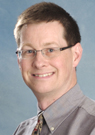
Bradley A. Saville Professor, B.Sc., Ph.D.(Alberta), P.Eng.
Bioprocess technology, biomass pretreatment and hydrolysis, bioseparations, biofuels (ethanol, biodiesel, renewable diesel, renewable jet fuel), bioenergy, bioproducts, life cycle assessment, technoeconomic assessment, applications of enzymes, enzyme inactivation, inhibition and regulation of enzyme activity, therapeutic application of drugs and bioproducts (e.g., prebiotics).
Room: WB340 | Tel.: 416-978-7745 | Email: bradley.saville@utoronto.ca
New Projects Available
- Life Cycle Assessment and Technoeconomic Assessment of Biofuels and Bioproducts
Projects to be jointly supervised with
Heather MacLean
Accepting Graduate Students? Yes
- MASc
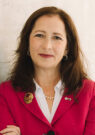 Molly S. Shoichet University Professor, B.Sc. (MIT), M.Sc., Ph.D. (Massachusetts)
Pamela and Paul Austin Chair In Precision and Regenerative Medicine
Advancing innovative therapeutic and cell delivery strategies to promote regeneration in the central nervous system – brain, spinal cord and retina.
Designing novel 3D biomimetic cellular microenvironments to enable drug discovery and screening in cancer – breast, brain, lung, lymphoma.
Translating our inventions towards commercialization.
Room: DC514 | Tel: 416-978-1460 | Email: molly.shoichet@utoronto.ca
New Projects Available
- Therapeutic delivery and discovery strategies
Accepting graduate students? Yes
- PhD
 Nicole Weckman, Assistant Professor (ISTEP, ChemE), BASc (Waterloo), MEng (McGill), PhD (Cambridge), Postdoc (Harvard)
Paul Cadario Chair in Global Engineering
My research group develops sensitive and quantitative biological and biochemical sensors at the interface of cell-free synthetic biology and microscale and nanoscale sensing systems. We focus on engineering design for clinical and commercial translation with a particular emphasis on how these sensors can be used to improve global health and protect our environment.
Room: MY791 | Tel.: 416-946-4017 | Email: nicole.weckman@utoronto.ca
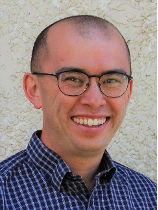 Jay Werber, Assistant Professor, B.Sc. (Washington Univ. St. Louis), M.Sc., Ph.D. (Yale), Post-doc (Minnesota)
My research group focuses on membrane materials and membrane separation processes with the aim of attaining breakthrough performance in molecular separations. We are especially motivated by major sustainability challenges, including water scarcity, atmospheric CO2 levels, and the production and recycling of metals. Our work covers all aspects of separation science, including the synthesis and characterization of high-performance membranes, fundamental transport in polymers, and process design.
Room: WB362 | Tel.: 416-978-4906 | Email: jay.werber@utoronto.ca
New Projects Available
-
Reverse osmosis membrane development
-
Ion exchange membrane development
Currently accepting graduate students? Yes
- PhD & MASc
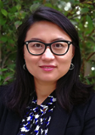 Ning Yan, Professor, B.Eng, (Southeast), Ph.D. (Toronto), P.Eng., FEIC
Tier 1 Canada Research Chair in Sustainable Bioproducts
Distinguished Professor in Forest Biomaterials Engineering
Director of Low Carbon Renewable Materials Centre
Lignocellulosic biomaterials engineering; forest and agriculture residue utilization and conversion to value-added products; Cellulose, lignin, and extractives valorization to green chemicals and functional materials; bio-based polymers, chemicals, composites, and functional materials; sensors and devices.
Room: ES3037 | Tel.: 416-946-8070 | Email: ning.yan@utoronto.ca
New Projects Available
- Bio-based Functional Materials
- Bio-based Nanomaterials
- Bio-based Energy Storage Device,
Accepting graduate students? Yes
- MASc & PhD
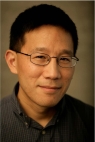
Christopher M. Yip Professor, B.A.Sc. (Toronto), Ph.D. (Minnesota), P.Eng.
Dean, Faculty of Applied Science & Engineering
Molecular self-assembly: Protein-ligand and biomolecular complexes and elucidation of the mechanisms associated with their formation. Organic solid-state focusing on molecular and biomolecular crystals and their properties. Biomolecular and ligand-receptor interaction forces. Application of scanning probe microscopy to the characterization of biomolecular processes and structures. Novel protein complexes at interfaces. Molecular modeling of biomolecular complexes. Synthesis and characterization of molecular solids. Structure-property relationships in supramolecular assemblies. Advanced imaging including combinatorial super-resolution microscopies and spectroscopies.
Office of the Dean, 44 St. George Street | Tel.: 416-978-7853 |
Email: christopher.yip@utoronto.ca